Questions this answers
- Is the AI infrastructure arms race mainly about who has the best model?
- What does open weights actually guarantee, and what does it not guarantee?
- How should the historical DeepSeek-V3 training-cost figure be used correctly?
- Are OpenRouter rankings and Artificial Analysis scores the same kind of evidence?
- What is the practical difference between MCP and a proprietary agent tool-calling system?
Abstract
The public conversation about AI competition still centers on model quality: which lab shipped the smartest system this quarter. That framing misses where the real contest has moved. The constraints that determine what builders can actually ship in 2026 are structural - electricity supply, chip allocation, data-center buildout, training and inference efficiency, the terms under which model weights circulate, the surfaces that report model performance and usage, and the protocols that let a model call tools instead of just answering questions. This article treats the AI infrastructure arms race as a seven-layer stack: compute and energy, capital expenditure, efficiency engineering, open-weight distribution, model metadata and rankings, agent protocols, and the routing/evaluation loop that production teams run every day. We use only claims that trace to a named, dated source, and we flag where a popular narrative outruns the evidence.
Key Findings
- The IEA projects global data-center electricity consumption will roughly double from 485 TWh in 2025 to 950 TWh in 2030, with AI-optimized data centers growing faster than the data-center segment overall - making power, not chip count alone, the binding constraint on new capacity.
- NVIDIA's FY2026 data-center revenue rose 68% year over year to $193.7B (full-year revenue $215.938B), while the company's own FY2027 Q1 outlook does not assume any China data-center compute revenue, showing that capital intensity and geopolitical exposure are now inseparable in infrastructure planning.
- DeepSeek-V3's historical technical report states an official training run of 2.788 million H800 GPU hours at roughly $5.576M, explicitly excluding prior research, ablation experiments, architecture exploration, algorithm development, and data costs - a number that is frequently misquoted as "the cost of the model" rather than one accounting line inside it.
- Stanford's 2026 AI Index reports that the top-tier performance gap between U.S. and Chinese models has effectively closed, while the U.S. still produces more top-tier models and China leads in publication volume, citations, patent output, and industrial robot installations - a more fragmented picture than either "the U.S. is ahead" or "China has caught up" alone.
- Anthropic's Model Context Protocol, introduced as an open standard for secure two-way connections between AI systems and data sources, has grown to more than 10,000 active public servers and adoption across ChatGPT, Cursor, Gemini, Microsoft Copilot, and VS Code before being donated to the Linux Foundation's new Agentic AI Foundation - agent tooling is now standardizing faster than most model-layer competition.
Source Snapshot
| Source | What it establishes | Observed |
|---|---|---|
| IEA - Key Questions on Energy and AI | Data-center electricity demand trajectory, AI server power density trend | 2026-07-09 |
| NVIDIA FY2026 results | Data-center revenue growth, forward guidance on China exposure | 2026-07-09 |
| OpenAI - Stargate announcement | Capital commitment structure and initial equity funders | 2026-07-09 |
| DeepSeek-V3 historical technical report | Training compute-hours and official cost accounting scope | 2026-07-09 |
| Qwen3 launch | Open-weight release structure and deployment tooling | 2026-07-09 |
| Stanford AI Index 2026 | Model-performance gap, national research output, data-center count, fab concentration | 2026-07-09 |
| Anthropic - MCP launch | Agent-to-tool protocol design intent | 2026-07-09 |
| Anthropic - MCP donation / AAIF | Current adoption footprint and governance transfer | 2026-07-09 |
| OpenRouter rankings | Usage-based model demand signal | 2026-07-09 |
| OpenRouter Models API docs | Model metadata schema as infrastructure | 2026-07-09 |
| Artificial Analysis methodology | Model/endpoint/provider distinction in benchmarking | 2026-07-09 |
| Artificial Analysis Intelligence methodology | Composite index construction and stated limitations | 2026-07-09 |
| vLLM / PagedAttention paper | Inference-serving throughput gains | 2026-07-09 |
| Pentos - AI 军备竞赛 | Original narrative framing, reworked here around infrastructure | 2026-07-09 |
Methodology and Refresh Triggers
Claims in this article were retained only where they could be traced to a named, dated source: government or IEA energy projections, vendor financial disclosures, technical reports published by model labs, or third-party benchmark aggregators such as Artificial Analysis and OpenRouter. Source vintages span late 2025 through early 2026, and each section notes the reporting period where the underlying data is time-bound (e.g., quarterly earnings, index editions).
The originating Pentos report framed infrastructure competition in military and geopolitical terms and included several claims - projected national compute-share dominance, strategic-value framings, and forward-looking capability timelines - that could not be verified against public technical or financial disclosures. These were excluded rather than reframed, since restating unverifiable claims in infrastructure language would not resolve the underlying evidentiary gap. Where a Pentos claim overlapped with a verifiable figure (e.g., data-center energy demand, published model benchmarks), the claim was rebuilt from the primary source rather than carried over from the report.
This article should be refreshed when any of the following occur: a new NVIDIA quarterly earnings release materially changes data-center revenue or shipment figures; a new Stanford AI Index edition is published; OpenRouter or Artificial Analysis rankings shift enough to change the relative standing of open versus closed models cited here; a major open-weight model release (e.g., a new DeepSeek, Qwen, or comparable model family) alters the open-model competitiveness narrative; the IEA publishes an updated data-center electricity demand projection; or a cited lab issues a materially different agent-protocol or infrastructure-investment announcement. Absent one of these triggers, the claims and comparisons here should be treated as a snapshot rather than a live status.
Why "AI Infrastructure Arms Race" Is the Better Frame
The dominant press narrative about AI competition is a leaderboard story: one lab releases a model, a rival responds within weeks, commentators score the round. That framing is not wrong so much as incomplete. It treats model quality as the scarce resource, when for most builders the scarce resources are electricity, chip allocation, serving capacity, and the tooling that turns a model's output into something a system can act on.
Consider what actually gates a new model deployment in 2026. It is rarely "can we get a smarter checkpoint." It is: can we get GPU capacity at a data center with enough power density, at a price that survives the unit economics of the product, served through infrastructure that keeps latency predictable, wrapped in a protocol that lets the model call the tools the workflow needs, with observability that lets an engineering team catch a regression before a customer does. Each of those is a distinct competitive layer with its own leaders, its own bottlenecks, and its own pace of change.
This is why we use "infrastructure arms race" rather than "model race." The unit of competition is the full stack - chip, power, data center, serving software, model, API surface, and agent protocol - not a single leaderboard number.
For platform teams, the practical implication is that competitive intelligence needs to track capex disclosures, power projections, and protocol adoption alongside benchmark scores. A team that only watches leaderboards will miss the moves that actually reshape what is buildable.
Compute Is Now Power, Land, Chips, and Scheduling
The most binding constraint on AI infrastructure growth is not chip supply in isolation - it is electricity. The IEA's analysis projects that global data-center electricity consumption will roughly double, from 485 TWh in 2025 to 950 TWh in 2030, with AI-optimized data centers growing faster than the data-center segment as a whole. That is not a modest efficiency-adjusted forecast; it is a doubling of a category that already competes with national grids for capacity in some regions.
The density problem compounds the volume problem. The IEA reports that AI server power density increased roughly 11x from 2020 to 2025, and may increase another 4x by 2027. That trajectory means the physical footprint of "a rack of AI compute" is changing faster than most utility interconnection processes, cooling designs, or permitting timelines can absorb. A data center engineered for 2023-era rack density is not simply "less efficient" for 2027-era hardware - it may be structurally unable to host it without a retrofit.
Stargate is the clearest recent example of capital commitment at this scale outside chip vendors themselves. OpenAI's announcement describes an intent to invest $500B over four years, with $100B deployed immediately, and names SoftBank, OpenAI, Oracle, and MGX as initial equity funders. We treat this strictly as a capital-commitment signal: it demonstrates the scale at which infrastructure players are willing to pre-commit capital to future compute capacity. It does not, on its own, prove execution pace, facility count, or staffing levels, and we do not carry forward unverified claims about how the buildout has proceeded since announcement.
The supply chain underneath all of this remains narrow. Stanford's 2026 AI Index reports that leading-edge AI chip fabrication is concentrated at TSMC, and that the U.S. hosts 5,427 data centers - a number that illustrates geographic concentration of both fabrication and hosting capacity even as demand globalizes. A single fab node and a small number of hyperscale-dense regions sit underneath a market that increasingly treats "compute" as a fungible commodity. It is not fungible; it is geographically and politically concentrated in ways that shape everything downstream, from lead times on new capacity to the price stability that model-serving businesses depend on.
For an infrastructure or platform team, the practical reading is: capacity planning has to account for power interconnection timelines and fab concentration risk, not just chip vendor roadmaps. A routing or serving architecture built assuming stable multi-region GPU pricing is making an implicit bet on grid capacity and geopolitical stability that is outside any single AI company's control.
The Efficiency Route Is an Infrastructure Strategy
If compute and power are constrained, the natural counter-move is efficiency - extracting more usable intelligence per GPU-hour and per watt rather than simply buying more hardware. This is not a philosophical alternative to the compute race; it is itself an infrastructure strategy, and one with a documented example.
DeepSeek-V3's historical technical report states an official training run of 2.788 million H800 GPU hours, at roughly $5.576M. That figure is precise, sourced, and worth reading exactly as scoped: it explicitly excludes prior research, ablation experiments, architecture exploration, algorithm development, and data collection costs. It is the cost of one training run, not the cost of building a lab capable of producing that run. Treating it as "the total cost of a frontier model" - a common misreading in public commentary - overstates what the number supports and understates the R&D investment that made the run possible in the first place.
What the number does support is a real signal about efficiency engineering as a competitive lever. A training run that achieves competitive quality at a documented, comparatively low GPU-hour cost demonstrates that architecture and training-pipeline choices can materially change the compute-per-unit-of-capability ratio. That is exactly the kind of infrastructure lever that matters more as power and chip supply tighten: if you cannot easily buy more capacity, you extract more from the capacity you have.
Qwen3's release illustrates a third efficiency dimension: deployment-target diversity. The Qwen3 launch open-weights two mixture-of-experts models and six dense models under Apache 2.0, with official recommended deployment paths across SGLang, vLLM, Ollama, LMStudio, MLX, llama.cpp, and KTransformers. Offering both MoE and dense variants at multiple parameter scales is itself an efficiency strategy at the distribution layer: it lets a builder choose the compute profile that matches their hardware constraint - from a cloud-scale MoE deployment down to a local dense model on consumer hardware - rather than forcing every deployment through the same compute-heavy path.
For platform teams, the operational lesson is that efficiency and scale are not opposing camps competing for the same budget; they are two levers on the same problem, and the teams best positioned for the next two years are the ones instrumenting both. Our own routing and cost-per-task analysis treats this as an operational question rather than an ideological one: given a fixed task distribution, which combination of model choice and serving configuration minimizes cost at an acceptable quality floor.
Open Weights Change Distribution, Not Automatically Governance
The Qwen3 release under Apache 2.0 is a distribution decision, and it is worth being precise about what that decision does and does not change. Open weights mean a model's parameters can be downloaded, run on infrastructure the operator controls, fine-tuned, and redistributed under the stated license terms. That is a meaningfully different arrangement from an API-only model, where the weights never leave the provider's infrastructure and every inference call is mediated by that provider's serving stack, rate limits, and terms of service.
We use "open weights" rather than "open source" deliberately through this piece. Whether a given release meets an OSI-style open-source standard depends on training-data disclosure, reproducibility of the training pipeline, and license terms beyond weight redistribution - criteria that most current "open" model releases, including many widely covered as "open source" in press coverage, do not fully satisfy. Qwen3's Apache 2.0 license on the weights is a real and verifiable distribution commitment; it is not, on its own, evidence of full training-pipeline transparency.
What open weights reliably change is the control surface. A builder running an open-weight model on self-hosted infrastructure controls uptime, controls data residency, controls fine-tuning, and is not exposed to a provider's pricing changes or deprecation schedule. What open weights do not automatically deliver is governance in the sense of documented safety evaluation, red-teaming disclosure, or accountability for downstream misuse - those remain separate commitments that a releasing organization may or may not make alongside the weight release itself.
The practical decision for a platform team is rarely "open weights versus closed API" in the abstract. It is a per-workload decision: does this workload need data residency guarantees that only self-hosting provides, or throughput guarantees that a provider's dedicated capacity offers, or does it tolerate the shared-infrastructure trade-offs of a router that can move traffic across providers as pricing and availability shift. Our model comparison tooling treats this as an explicit trade-off surface rather than a philosophical position - open weights are a distribution and control mechanism, evaluated the same way you would evaluate any other infrastructure dependency.
Rankings and Model Data Become Operational Infrastructure
A layer of the stack that gets far less attention than chips or model releases is the model-metadata layer: the APIs, rankings, and benchmark methodologies that tell a builder which models exist, what they cost, how fast they respond, and how they compare on tasks that matter to a given product. This layer has become infrastructure in its own right, because production routing decisions increasingly depend on machine-readable answers to those questions rather than manual research.
OpenRouter's Models API documentation describes exposing model metadata, modalities, supported parameters, and sortable views by pricing, context window, and latency/throughput. That is a genuinely different kind of resource than a benchmark paper: it is a live, queryable index that a routing system can call programmatically before making a dispatch decision. OpenRouter's public rankings, separately, present live rankings based on benchmarks and real usage data, including top models by weekly usage and by task-level share of spend. That is a demand signal, not a global truth claim - it reflects the traffic that flows through one platform's marketplace, which correlates with broader market behavior but is not identical to it. A model that is the top pick by weekly usage on one router may be underrepresented on a different platform's traffic for reasons that have nothing to do with quality, including default configuration choices, partner integrations, or regional availability.
Artificial Analysis takes a different approach: independent benchmarking across intelligence, quality, performance, and price, with an explicit methodology that distinguishes model, endpoint, provider, and serverless deployment as separate concepts. That distinction matters more than it sounds. The same underlying model, served by two different providers, can post materially different latency and throughput numbers because the serving infrastructure - not the model weights - differs. A benchmark that reports "model X is fastest" without specifying the endpoint and provider is reporting on infrastructure performance and attributing it to the model.
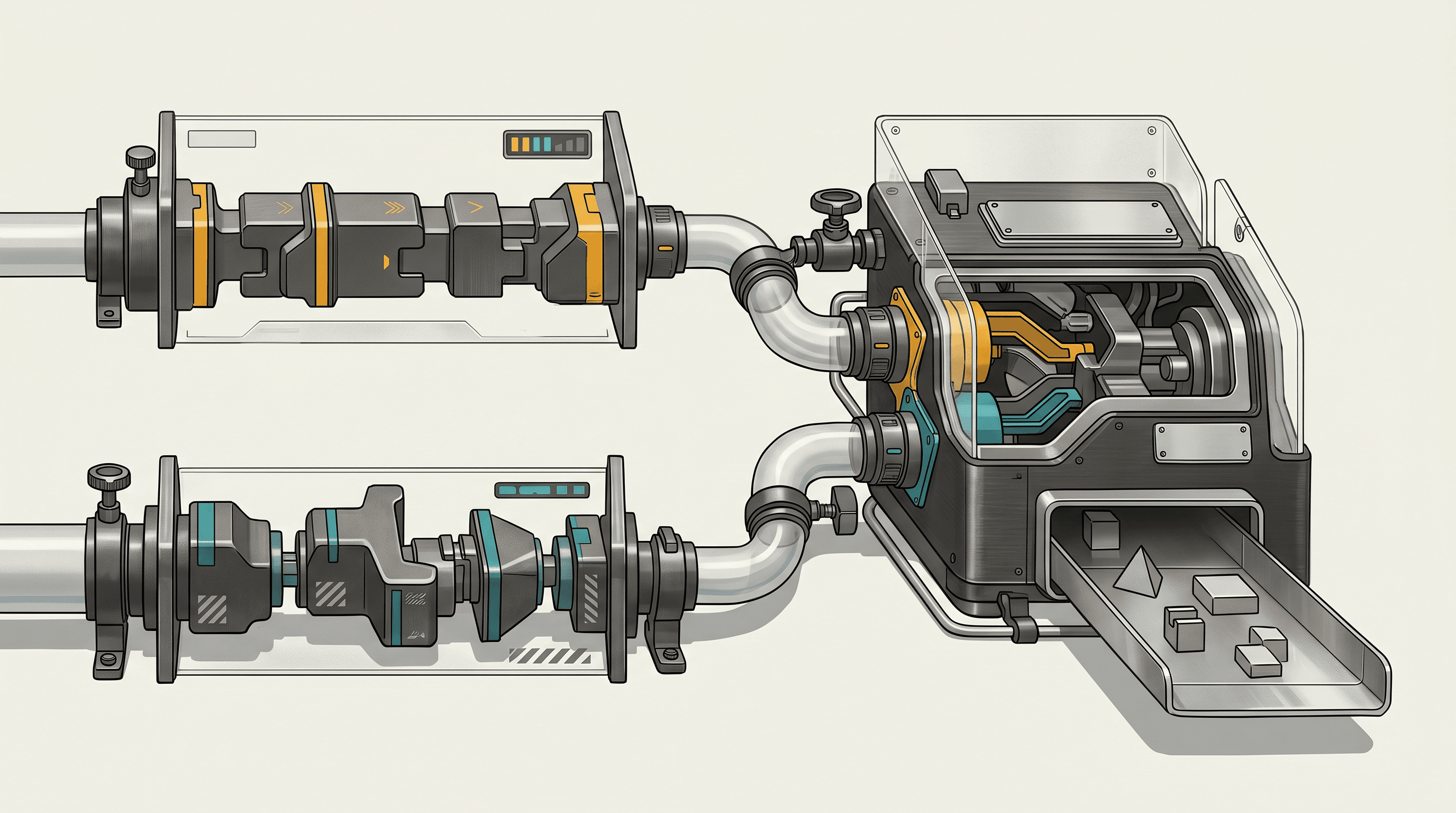
This is the same distinction the stack figure earlier in this piece is meant to illustrate: the metadata and ranking layer sits between the model layer and the API surface that builders actually consume, and conflating a serving-layer number with a model-layer claim is a category error that ranking literacy is meant to catch.
Artificial Analysis's Intelligence Index methodology adds a further caveat directly in its own documentation: the v4.1 index weights agents, coding, scientific reasoning, and general capability into a composite score, and the methodology explicitly states that such metrics have limitations and may not apply to every use case. That is an unusually direct admission from a benchmarking provider, and it should be read as a standing instruction to builders: a composite intelligence score is a screening tool for narrowing a shortlist, not a substitute for evaluating a candidate model against your own task distribution.
This is the argument behind treating leaderboard literacy as its own infrastructure competency. A platform team that can query live model and pricing data, cross-reference it against independent leaderboard signals, and still run its own task-specific evaluation before committing traffic is operating at a different level of rigor than a team that picks a model off a single ranking page and assumes the ranking transfers to their workload. The metadata layer is infrastructure precisely because it now sits in the automated decision path of production routing systems - not just in a procurement spreadsheet reviewed once a quarter.
Agents Turn Model Output into Systems Action
The layer with the fastest-moving standardization dynamics right now is not the model layer - it is the agent protocol layer, the software that lets a model's output trigger an actual action in an external system rather than terminating in a chat window.
Anthropic introduced the Model Context Protocol as an open standard for secure, two-way connections between AI systems and external data sources. The design goal stated at launch was straightforward: give models a standard way to reach into tools and data rather than requiring every integration to be built as a bespoke, one-off connector. That is an infrastructure problem in the same category as a database driver standard or an API specification - it exists to reduce the combinatorial cost of connecting N models to M tools.
The adoption trajectory since launch is the more significant infrastructure signal. Anthropic's announcement of donating MCP to the Linux Foundation's newly established Agentic AI Foundation reports more than 10,000 active public MCP servers and adoption across ChatGPT, Cursor, Gemini, Microsoft Copilot, and VS Code. That is cross-vendor adoption of a single protocol among direct competitors - a pattern that is rare in AI infrastructure and notable specifically because it did not require those vendors to agree on model quality, pricing, or governance philosophy. They converged on a shared plumbing layer because divergent, incompatible tool-calling standards would have imposed integration costs on every one of them.
Handing MCP to an independent foundation rather than keeping it under a single vendor's control is itself a governance decision worth reading carefully. A protocol that mediates what a model is allowed to touch - which files, which APIs, which systems - carries real security weight. Placing that protocol's stewardship outside any single lab's commercial incentives is a different posture than keeping it as a proprietary differentiator, and it is consistent with treating the agent-tooling layer as shared infrastructure rather than competitive IP.
This is the frame that should replace vague "AI safety" language in production discussions. The question is not whether a given model is aligned in the abstract; it is whether the surrounding agent infrastructure enforces least-privilege access, produces an audit trail sufficient to reconstruct what happened after an incident, and fails safely when a tool call is ambiguous or out of scope. Our agent fallback and routing guide treats this as an operational design problem: what happens when the primary model in an agent chain returns a malformed tool call, times out, or gets rate-limited mid-task, and how the fallback path preserves the same permission boundaries rather than quietly relaxing them under pressure to keep the workflow moving.
The strategic reading for infrastructure teams is that agent capability is now gated less by model reasoning quality and more by how rigorously the surrounding permission and audit layer is built. A frontier-quality model wired into a permission system with no scoping and no audit trail is a bigger operational risk than a mid-tier model wired into a well-instrumented one.
What This Means for Model Platforms and Builders
Pulling the layers together into a practical checklist, a team building on top of this stack in 2026 should be tracking distinct signals at each layer rather than collapsing everything into a single "which model is best" question:
Compute and power: Track data-center power availability and interconnection timelines in the regions your provider actually serves from, not just headline chip announcements. A provider's pricing stability depends on power contracts you will never see directly.
Capex signals: Read capital-commitment announcements - Stargate-scale or otherwise - as demand-side signals about where capacity is being pre-purchased, not as guarantees of near-term availability. Capital committed today does not translate into GPU-hours available next quarter.
Efficiency, not just scale: Evaluate both training-side efficiency claims (with their stated cost-accounting scope, as the historical DeepSeek-V3 report makes clear) and serving-side efficiency gains (like PagedAttention-class throughput improvements) as separate, compounding levers. A serving-stack upgrade can deliver throughput gains independent of any model change.
Open weights as a control decision: Choose open-weight self-hosting when data residency, fine-tuning control, or provider-independence outweigh the operational burden of running your own inference infrastructure. Choose API or router access when throughput guarantees and lower operational overhead outweigh the loss of infrastructure control. Do not treat "open" as a synonym for "safer" or "cheaper" without checking the specific license and deployment cost for your workload.
Metadata and ranking literacy: Use machine-readable model metadata and independent benchmark methodology to narrow a shortlist, then run your own task-specific evaluation before committing production traffic. A composite leaderboard score is a screening signal, explicitly scoped by its own methodology documentation, not a deployment decision.
Agent permission design: Build the tool-call, permission-check, and audit-log layer before extending agent capability, not after an incident. Treat every model output that can trigger a system action as a proposal requiring explicit authorization, regardless of how capable the underlying model is.
Cost-per-task discipline: Route by workload economics, not model prestige. A cheaper model that clears your quality bar for a high-volume, low-complexity task category is the correct choice for that category, even if a frontier model wins every abstract leaderboard. Our cost-per-task routing research and our lower-cost model directory are intended to make that trade-off visible rather than implicit.
None of these are one-time decisions. Each layer moves on its own schedule - power buildout on a multi-year timeline, model releases on a monthly-to-quarterly cadence, protocol adoption in bursts once a standard reaches critical mass. Infrastructure competitiveness in 2026 looks less like picking a winner and more like maintaining a routing and evaluation loop that can absorb changes at each layer without a full architecture rewrite every time a new model or protocol version ships.
Decision Matrix for API and Platform Teams
The infrastructure signals surveyed above have practical implications for teams building on top of model APIs, independent of which lab or vendor ultimately leads on raw capability. The table below maps observed signals to decision points; it does not recommend a specific vendor or product.
| Infrastructure Signal | Practical Question It Raises | Where to Look Before Deciding |
|---|---|---|
| Historical open-weight model releases (e.g., DeepSeek-V3, Qwen3) narrowing capability gaps with closed models | Is self-hosting or open-weight fine-tuning now viable for this workload, or does closed-API convenience still outweigh the gap? | Independent benchmark aggregators (Artificial Analysis, OpenRouter rankings) rather than lab-published benchmarks alone |
| Divergent rankings across benchmark providers | Which benchmark methodology matches this workload's actual task distribution? | Published methodology notes before adopting a single leaderboard as ground truth |
| Serving-layer efficiency gains (e.g., PagedAttention/vLLM-class techniques) | Does self-hosted inference now change the cost/latency tradeoff versus API calls for this traffic pattern? | Own load-testing under representative concurrency, not vendor-reported throughput figures |
| Emerging agent/tool-use protocols (e.g., MCP) | Should integration work target a protocol-level standard or a vendor-specific SDK? | Protocol adoption breadth across multiple labs and tools, not a single vendor's roadmap |
| Data-center energy and capacity constraints (IEA projections, large capex announcements such as Stargate) | Should capacity planning assume continued price and availability improvements, or budget for tighter supply during peak periods? | Regional power and grid capacity data alongside vendor capacity announcements |
| Concentration of compute investment among a small number of large infrastructure programs | Does this create single-vendor dependency risk for latency- or availability-sensitive systems? | Multi-provider fallback testing and contractual terms, not general claims of redundancy |
None of these signals resolves a decision on its own; each substitutes a specific, checkable question for a general claim about which side is 'winning' the infrastructure race.
2027-2030 Scenarios
We do not have a basis to forecast a single outcome for how this stack resolves over the next several years. What we can do is lay out scenarios anchored to the layers above, each with indicators that would confirm or falsify it as it develops. These are scenarios, not predictions.
Scenario A - Power-constrained consolidation: Data-center electricity demand tracks or exceeds the IEA's 950 TWh 2030 projection, grid interconnection becomes the binding constraint on new capacity, and compute access concentrates among the operators who secured power contracts and fab allocation earliest. Indicator to watch: interconnection queue timelines and reported power-purchase agreements from major data-center operators, not chip shipment announcements alone.
Scenario B - Efficiency-led diffusion: Training and serving efficiency gains, in the pattern the historical DeepSeek-V3 anchor and PagedAttention-class serving work both illustrate, continue to reduce the compute-per-unit-of-capability ratio faster than demand grows, and competitive model capability diffuses to a wider set of operators rather than concentrating with the largest compute holders. Indicator to watch: whether newly released open-weight models continue to close the top-tier capability gap that Stanford's 2026 Index describes, using comparable or lower compute budgets than prior-generation models required.
Scenario C - Protocol-standardized agent layer: Agent tool-calling standardizes around a small number of open, foundation-governed protocols (MCP's donation to the Agentic AI Foundation being the clearest current example), and competitive differentiation shifts almost entirely to the permission, audit, and orchestration layer built on top of a shared protocol, rather than to the protocol itself. Indicator to watch: whether additional major model providers and tool platforms adopt the same protocol rather than maintaining competing standards, and whether the foundation's scope expands beyond its initial remit.
What This Does Not Prove
This article deliberately excludes a set of claims that circulate in adjacent coverage of the "AI arms race" narrative because they lack a source we could independently verify at the confidence level this piece requires. Naming them explicitly is more useful than silently omitting them:
- We do not have a verified source for claims about a federal ban on any specific AI provider tied to a refusal over military-related safety changes. This claim appears in some coverage but is not independently confirmed here and is excluded.
- We do not have a verified, dated source confirming Stargate's actual data-center count or staffing level at any specific point after the original announcement. The announcement establishes intent and initial capital structure; it does not establish execution pace, and we do not carry forward unverified execution claims in either direction.
- We do not have a primary source for specific GPU fleet-size claims attributed to any single company's data-center cluster. Figures like this circulate widely in secondary coverage without a traceable primary source and are excluded from this piece.
- We do not use military-application performance claims (drone targeting rates or similar) because they fall outside verifiable, dated, primary-source material available to us and outside the infrastructure-and-builder scope of this article.
- We do not use specific defense-budget line-item figures for AI spending, or law-enforcement case dollar figures related to chip export enforcement, because they are not central to the infrastructure argument here and were not independently verified for this piece.
- We do not use AI agent market-size or growth-rate estimates. Market-sizing figures for a category this new vary widely by methodology and are not load-bearing for the infrastructure argument this article makes.
- Benchmark and ranking data cited here (OpenRouter usage rankings, Artificial Analysis scores) reflect specific platforms' methodologies and traffic, observed on the date stated. They do not establish a single global ranking of model quality, and should not be read as such.
- The historical DeepSeek-V3 training-cost figure is scoped explicitly to one training run's GPU-hours, per the technical report itself. It does not establish total company R&D spend, and should not be used as a benchmark for "the cost of building a frontier lab."
FAQ
Is the AI infrastructure arms race mainly about who has the best model?
No. Model quality is one visible layer of a wider competition that includes electricity supply, chip fabrication concentration, data-center capital expenditure, training and serving efficiency, open-weight distribution terms, and agent tool-calling protocols. A model that tops a leaderboard this quarter can still be deployed on infrastructure that cannot scale, served through a protocol that lacks tool-calling adoption, or priced in a way that makes it uneconomical for a given workload.
What does "open weights" actually guarantee, and what does it not guarantee?
Open weights, as with Qwen3's Apache 2.0 release, guarantee that a model's parameters can be downloaded, self-hosted, fine-tuned, and redistributed under the stated license. They do not automatically guarantee training-data transparency, reproducible training pipelines, or documented safety evaluation - those are separate commitments a releasing organization may or may not make alongside the weight release itself. Use "open weights" rather than "open source" unless a release specifically satisfies open-source criteria beyond weight redistribution.
How should the historical DeepSeek-V3 training-cost figure be used correctly?
The technical report states an official training run of 2.788 million H800 GPU hours at roughly $5.576M, and explicitly excludes prior research, ablation experiments, architecture exploration, algorithm development, and data costs. Use it as evidence that a documented training run achieved competitive results at a comparatively low GPU-hour cost. Do not use it as a total cost figure for building a frontier lab, and do not compare it directly to a competitor's total R&D spend without matching the accounting scope.
Are OpenRouter rankings and Artificial Analysis scores the same kind of evidence?
No. OpenRouter's rankings reflect live usage and share-of-spend on its own marketplace traffic - a real demand signal, but specific to that platform. Artificial Analysis runs independent benchmarking across intelligence, quality, performance, and price, and its own methodology explicitly distinguishes model, endpoint, provider, and serverless deployment as separate variables, while cautioning that its composite Intelligence Index has stated limitations and may not apply to every use case. Both are useful for narrowing a shortlist; neither substitutes for task-specific evaluation on your own workload.
What is the practical difference between MCP and a proprietary agent tool-calling system?
MCP, introduced by Anthropic as an open standard for secure two-way connections between AI systems and data sources, has since been adopted across competing platforms (ChatGPT, Cursor, Gemini, Microsoft Copilot, VS Code, per Anthropic's own adoption reporting) and was subsequently donated to the Linux Foundation's Agentic AI Foundation. A proprietary tool-calling system ties your integrations to a single vendor's roadmap and governance decisions. An open, foundation-governed protocol reduces that lock-in, though it still requires you to build your own permission and audit layer on top - the protocol standardizes the connection, not the authorization policy.
Sources
- Pentos source articleObserved 2026-07-09
- IEA Key Questions on Energy and AIObserved 2026-07-09
- NVIDIA FY2026 resultsObserved 2026-07-09
- OpenAI Stargate announcementObserved 2026-07-09
- DeepSeek-V3 historical technical reportObserved 2026-07-09
- Qwen3 launchObserved 2026-07-09
- Stanford AI Index 2026Observed 2026-07-09
- Anthropic Model Context ProtocolObserved 2026-07-09