Questions this answers
- Which model should handle memory consolidation by default?
- What happens if every model in the fallback chain fails?
- Does a 5-model fallback chain make memory consolidation more expensive?
A user finishes a 30-minute session with your agent. They shared requirements, stated preferences, made decisions. Then they start a new session, and none of it carries over. What usually broke is not the agent's reasoning, it's AI agent memory consolidation: the background step that turns a raw transcript into structured long-term memory. That step is a single API call to a single model, and single API calls fail. Rate limits, timeouts, and malformed tool output all produce the same symptom: silent memory loss with no error shown to the user.
The fix in this article is architectural, not a better prompt: run consolidation through an ordered chain of models instead of one model, so a failure on any single provider does not delete the conversation.
If you're building the surrounding product surface rather than just the memory subsystem, pair this page with the one-key chatbot guide and the AI API rate limiting guide. If you're comparing providers instead of individual models, read the OpenRouter comparison alongside this one.
Key Takeaways
- Memory consolidation is a narrow, structured-output task (tool call or forced JSON), and structured-output calls have more failure modes than free-form chat: schema violations, truncation, rate limits, timeouts.
- A single model handling consolidation is a single point of failure. Treat consolidation as a reliability problem with a fallback chain, not a prompt-engineering problem.
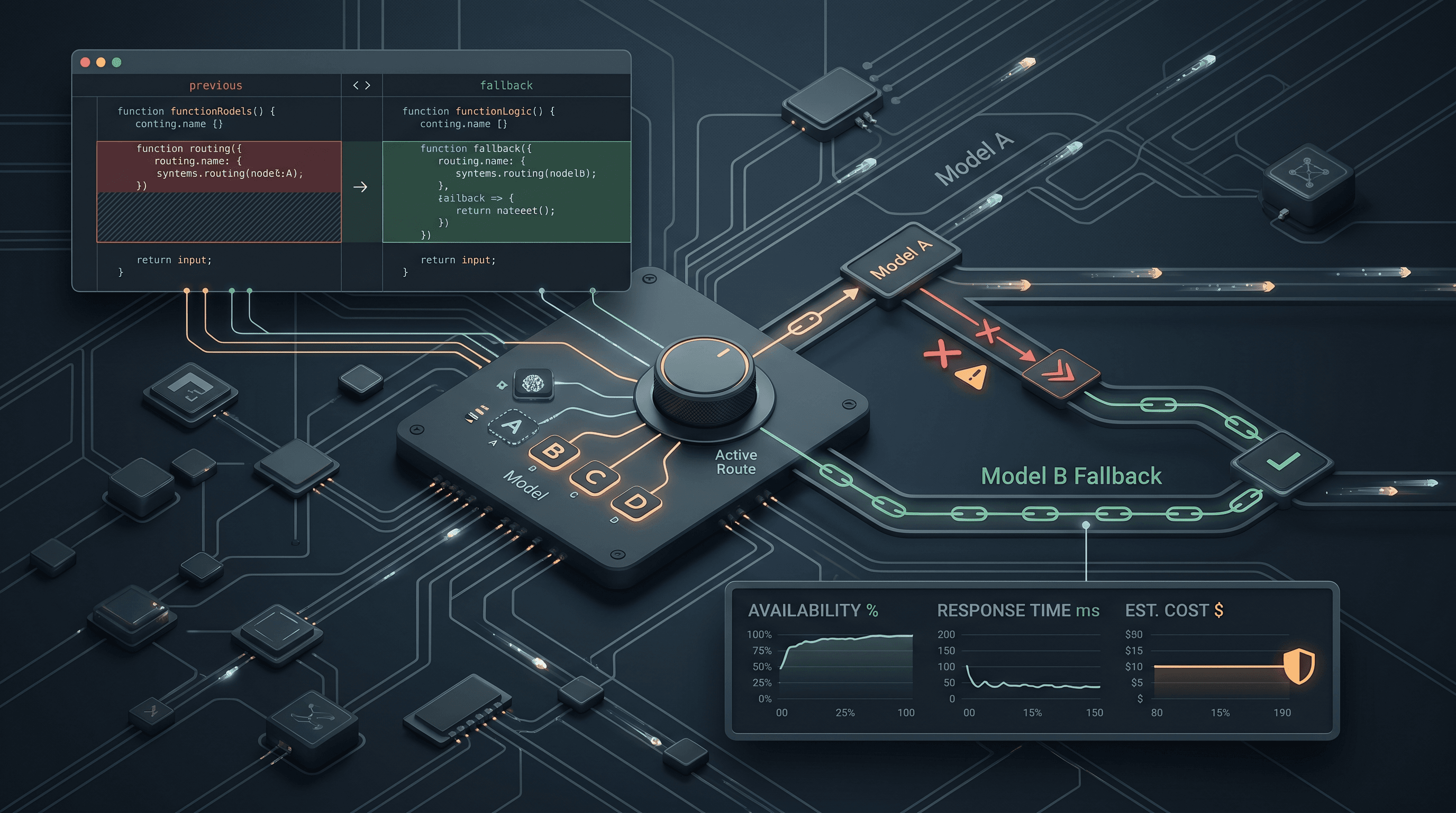
- A two-layer chain works well in practice: Layer 1 is a sequence of low-cost models (DeepSeek V4 Flash, GLM-5.2, Qwen3.7 Plus, Gemini 3.5 Flash, GPT-5.5) that fail over to each other on any error. Layer 2 escalates to Claude Sonnet 5, then Claude Opus 4.8, only when every Layer 1 model fails.
- This article does not have a published, reproducible failure rate or cost-reduction percentage for this exact runtime. The pricing math below is illustrative and labeled as such. Measure your own workload before citing a number.
- Because the chain fails over across independent providers rather than retrying one provider repeatedly, it does not concentrate load on a single rate limit, and because consolidation runs as an async background job, added retry latency does not block the user-facing chat turn.
What is AI agent memory consolidation?
Memory consolidation is the process of converting a raw conversation transcript into structured, durable facts: user preferences, decisions, project state, entities mentioned. It's distinct from the agent's active context window, which holds the current session's messages. Consolidation typically runs once per session (on close, on idle timeout, or on a rolling window) and writes its output to a database, vector store, or memory service rather than back into the chat.
Because the output has to match a schema (so downstream retrieval code can use it), consolidation is almost always implemented as a forced tool call or a JSON-mode completion, not a plain chat reply. That's the detail that makes it fragile: a model can hold a perfectly good conversation and still fail the consolidation step by returning prose instead of the tool call, truncating JSON on a long transcript, or inventing a field your schema doesn't have.
Why single-model consolidation fails
Structured output calls have more failure modes than a normal chat completion:
- The model ignores the tool schema and returns prose instead of a tool call.
- The provider returns a rate limit (429) or a server error (500/502/503) during a traffic spike.
- The request times out, often on longer transcripts that take more tokens to summarize.
- The model returns valid JSON with a field name or type that doesn't match your schema.
Any one of these turns a completed conversation into a silent memory gap. There's no error shown to the user. They notice later, when the agent "forgot" something, and by then the raw transcript may already be gone if you didn't persist it separately.
We have not published a controlled failure-rate benchmark for this exact runtime, workload, or date, so we won't restate a specific percentage here. What is verifiable is the mechanism: four concrete, named failure modes above, all of which get eliminated as single points of failure once you chain models instead of calling one.
Model pricing for the fallback chain
The table below lists current TokenLab pricing for the models used in the fallback chain described in this article. This is a TokenLab live pricing snapshot, distinct from any provider-published documentation. Verify these before locking in an order, since per-token pricing changes over time.
| Model | Context window | Input $/MTok | Output $/MTok | Source | Observed |
|---|---|---|---|---|---|
| DeepSeek V4 Flash | 1,048,576 | $0.09 | $0.18 | TokenLab live model/pricing snapshot | 2026-07-09 |
| GLM-5.2 | 1,048,576 | $0.93 | $3.00 | TokenLab live model/pricing snapshot | 2026-07-09 |
| Qwen3.7 Plus | 1,000,000 | $0.32 | $1.28 | TokenLab live model/pricing snapshot | 2026-07-09 |
| Gemini 3.5 Flash | 1,048,576 | $1.50 | $9.00 | TokenLab live model/pricing snapshot | 2026-07-09 |
| GPT-5.5 | 1,050,000 | $5.00 | $30.00 | TokenLab live model/pricing snapshot | 2026-07-09 |
| Claude Sonnet 5 | 1,000,000 | $2.00 | $10.00 | TokenLab live model/pricing snapshot | 2026-07-09 |
| Claude Opus 4.8 | 1,000,000 | $5.00 | $25.00 | TokenLab live model/pricing snapshot | 2026-07-09 |
For live rate limits, latest pricing, and reliability rankings, check the TokenLab model directory and the model leaderboard before finalizing your chain order.
If you're routing memory consolidation traffic in production, get started with TokenLab to reach all seven of these models through a single API key instead of managing separate credentials, rate limits, and error formats per provider.
The dual-layer fallback architecture
Layer 1: cheap, high-volume, provider-diverse
This layer runs on every consolidation event. Chain the models across at least three different providers, in this order:
- DeepSeek V4 Flash
- GLM-5.2
- Qwen3.7 Plus
- Gemini 3.5 Flash
- GPT-5.5
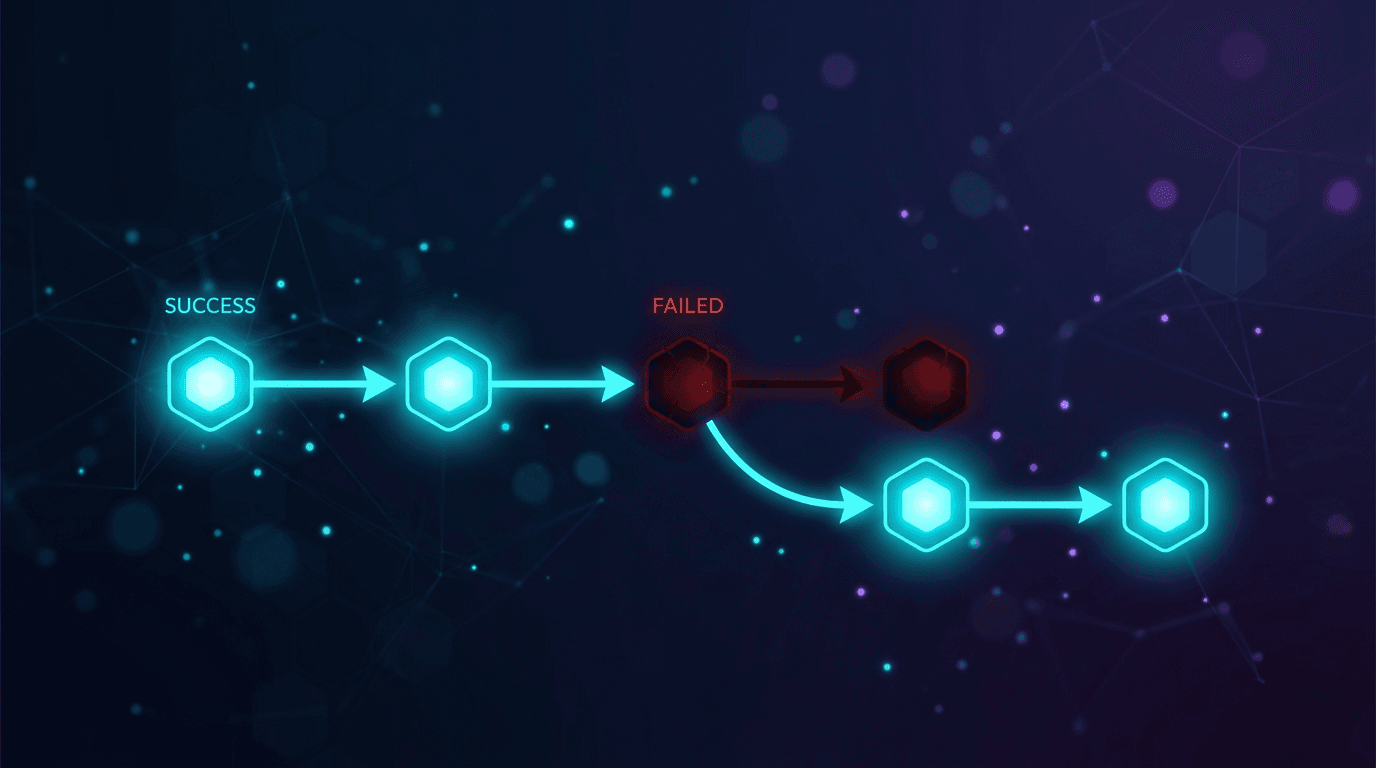
On any tool-call failure, schema violation, timeout, or 4xx/5xx response, move immediately to the next model in the list. Do not retry the same model in Layer 1; a rate limit or malformed response is more likely to repeat than to resolve on an instant retry.
Layer 2: escalation for genuine edge cases
If every Layer 1 model fails, escalate to a stronger model rather than looping back through Layer 1:
- Claude Sonnet 5
- Claude Opus 4.8 (final fallback)
Layer 2 should be rare. If you see frequent Layer 2 escalations in your logs, that's a signal to check your Layer 1 order, your schema strictness, or your transcript length, not a reason to make Layer 2 your default path.
How to implement async background memory consolidation
Consolidation should never block the user's next message. Run it as a background job triggered on session close or idle timeout, writing to your memory store when it completes, not inline in the chat response path. This decoupling is also what makes the worst-case latency of a multi-model chain acceptable: a few extra seconds of retries in a background worker has no effect on the user-facing turn.
The control flow, described without code, is:
- On session close or idle timeout, enqueue a background job with the full transcript.
- The worker attempts consolidation against the first model in the Layer 1 list, with a bounded per-attempt timeout.
- On timeout, 429, or 5xx, the worker moves to the next model in the list immediately, with no in-place retry against the same model.
- On a 200 response, the worker validates the payload against your JSON schema before accepting it. A response that passes the HTTP status check but fails schema validation is treated the same as a network failure: log it and move to the next model.
- If every Layer 1 model fails, the worker escalates to Layer 2 (Claude Sonnet 5, then Claude Opus 4.8) using the same timeout-and-validate logic.
- If every model in both layers fails, the worker persists the raw, unconsolidated transcript to storage and alerts an on-call engineer. The raw transcript is never discarded, regardless of how consolidation resolves.
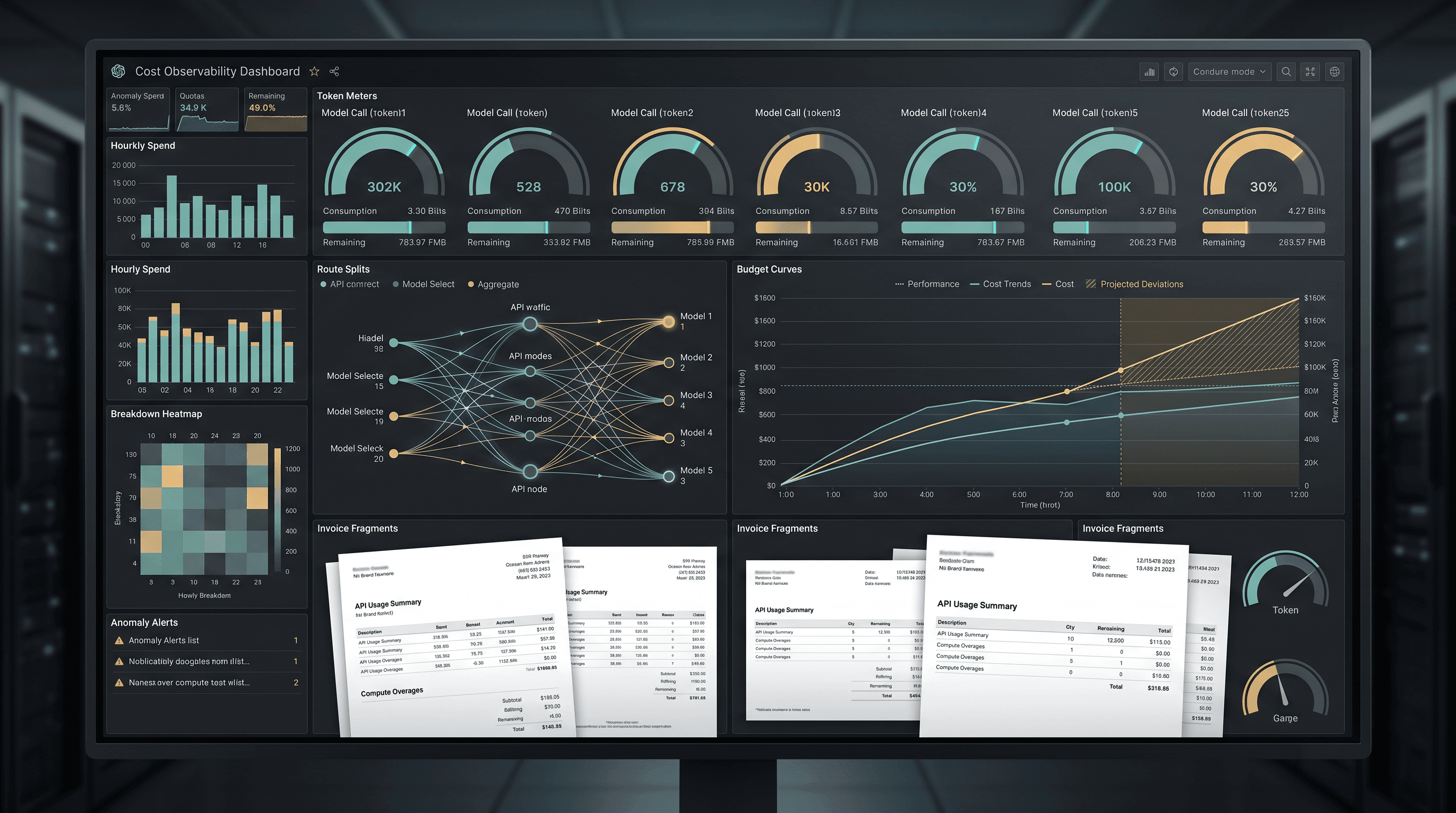
- Log which model resolved each event (or that the full chain failed) so you can measure your own Layer 1 resolution rate and reorder the chain later.
We are not publishing a copy-pasteable code sample with specific SDK method names, request payloads, or response shapes for these seven providers, because this evidence set does not contain verified endpoint, auth, and payload details for each one, and inventing them would produce integration code that looks correct but silently fails in production. Before you implement this flow, work through the verification checklist below against each provider's own documentation.
Verification checklist before you implement
- Confirm the current endpoint, auth header format, and request body shape for each provider's structured-output or tool-calling mode directly from their official API reference, not from a third-party summary.
- Confirm which exception or error object each provider's SDK raises for 429, 500/502/503, and client-side timeouts, since these differ by SDK and change across SDK versions.
- Confirm whether each provider's client library has a built-in retry mechanism that you need to disable, since you want cross-provider failover in this chain, not an in-library retry against the same model.
- Confirm your JSON schema validator runs on every response before it reaches
persist_memory, including responses that return HTTP 200. - If you route through a multi-provider gateway such as TokenLab instead of calling each provider directly, confirm the gateway's own error-passthrough format in its docs at tokenlab.sh/en/models before assuming provider-specific error codes propagate unchanged.
Error handling notes, mapped to real failure classes
| Error class | Handling |
|---|---|
| 429 rate limited | Move to the next model immediately. Do not retry the same model in-loop. If one model rate-limits repeatedly, add a short cooldown before it's tried again in future calls. |
| 500/502/503 server error | Treat as transient. Move to the next model. Do not add exponential backoff inside this chain; failover to a different provider is faster than waiting out one provider's outage. |
| Timeout | Cap each attempt (an illustrative bound of 5-10 seconds per call; tune to your transcript length). On timeout, move to the next model rather than extending the wait. |
| 4xx other than 429 | Usually a request-format bug on your side. Log loudly and alert a human; don't let it silently fail over forever without visibility. |
| 200 OK with malformed body | Validate against your JSON schema before accepting. A syntactically valid response with the wrong shape is still a failure and must be caught by validation, not just by HTTP status. |
On the "does this cause rate-limit exhaustion" objection: each Layer 1 model sits behind a different provider, so a 429 on one does not consume another provider's quota. The chain spreads load rather than concentrating it. Worst case, five Layer 1 attempts plus two Layer 2 attempts is seven calls; at an 8-second timeout cap per attempt, that bounds the worst case around a minute, and that scenario requires every provider to fail simultaneously, which is the rare edge case this design is built to survive, not the common path. This is a bound based on the timeouts you configure, not a measured production latency benchmark; we have not run this chain under load and are not reporting a measured p50/p99.
Illustrative cost comparison across the fallback chain
To show why routing most volume through cheap models matters, here is a worked example using the pricing table above. Assumption: an average consolidation call sends a 3,000-token transcript as input and produces 400 tokens of structured output. This is an illustrative assumption, not a measured average from any specific customer workload; substitute your own token counts.
| Model | Cost per call (assumption above) |
|---|---|
| DeepSeek V4 Flash | $0.00034 |
| Qwen3.7 Plus | $0.00147 |
| GLM-5.2 | $0.00399 |
| Gemini 3.5 Flash | $0.00810 |
| Claude Sonnet 5 | $0.01000 |
| Claude Opus 4.8 | $0.02500 |
| GPT-5.5 | $0.02700 |
The spread is real: routing 100% of calls through GPT-5.5 costs roughly 80x more per call than routing through DeepSeek V4 Flash, under this assumption. What we cannot state without your own data is what fraction of your traffic actually resolves at Layer 1 versus escalates to Layer 2, since that depends on your transcript length, schema complexity, and provider reliability on the day you run it. Log which model resolves each event (step 7 in the implementation flow above) and compute your own blended cost after a few thousand events rather than relying on a borrowed percentage.
Limitations
- No public, reproducible failure-rate benchmark exists for this exact chain, workload, or date in this evidence set. Instrument logging in your own runtime before citing a specific number.
- The cost table above uses an assumed token count, not a measured average transcript length. Recompute with your own numbers using the pricing table's source and observed date.
- Model pricing and context windows change. Confirm current values on the TokenLab model directory before finalizing a chain order for production.
- A fallback chain reduces single-point-of-failure risk; it does not guarantee zero data loss. Always persist the raw transcript separately from the structured consolidation output.
- Latency and rate-limit-exhaustion figures in this article are estimates based on configurable timeouts, not measured production benchmarks. We have not run this chain under load in this evidence set.
- This article intentionally does not include copy-pasteable request code, because exact endpoint, auth header, and payload evidence for these seven providers was not available to verify at write time. Use the verification checklist and each provider's official docs before implementing.
Implementation checklist
| Practice | Why it matters |
|---|---|
| Validate schema, not just HTTP status | A 200 response with malformed JSON or a missing tool call is still a failure your retry logic must catch. |
| Cap per-attempt timeout | Bound worst-case wall-clock time so one slow provider doesn't stall the whole background job. |
| Fail over across providers, not within one | A 429 or 503 on one provider should route to a different provider immediately rather than retrying the same one. |
| Log which model resolved each event | This is how you measure your own Layer 1 resolution rate and reorder the chain as pricing and reliability shift. |
| Never drop the raw transcript | Even on full-chain failure, persist the raw conversation. A failed structured summary is recoverable; a deleted transcript is not. |
| Alert on non-429/503 4xx errors | These usually indicate a schema or request bug on your side, not a transient provider issue, and should not be silently retried forever. |
| Verify SDK error types per provider before deploying | Exception classes for 429, 5xx, and timeouts differ across provider SDKs and change between SDK versions; check current docs rather than assuming. |
For provider-level routing decisions beyond individual models, the OpenRouter comparison covers how multi-provider routing changes rate-limit and failover behavior.
FAQ
What is AI agent memory consolidation?
The background process that converts a raw conversation transcript into structured, durable memory (facts, preferences, decisions) written to long-term storage, usually via a forced tool call or JSON-mode completion at session end.
How do I implement async background memory consolidation without blocking chat?
Trigger it on session close or idle timeout as a background worker job, separate from the chat response path. The worker writes to your memory store when it finishes; the user's next message doesn't wait on it. This is also what makes multi-model retry latency acceptable, since it happens off the critical path.
Will a 5-7 model retry chain cause latency or rate-limit problems?
Latency risk is bounded by your per-attempt timeout and is absorbed by running consolidation asynchronously. Rate-limit risk is mitigated because the chain fails over across different providers rather than retrying one provider repeatedly, so a 429 on one model doesn't hammer or exhaust another provider's quota. These are architectural mitigations, not measured latency numbers; we have not benchmarked this chain under production load.
Which model should handle memory consolidation by default?
Start with the cheapest reliable model for your volume, such as DeepSeek V4 Flash, and chain four or five models across different providers behind it as Layer 1. Reserve Claude Sonnet 5 and Claude Opus 4.8 as Layer 2 escalation only. Check current pricing on the TokenLab model directory before finalizing the order.
What happens if every model in the fallback chain fails?
Persist the raw transcript unconsolidated rather than discarding it, alert a human, and check whether the transcript itself (length, format, encoding) is triggering the failure across every provider, since a shared cause is more likely than seven independent outages.
How do I know if this actually reduces my cost?
Log which layer resolves each consolidation event and compute the blended cost from your own data using the per-model pricing table above. Don't rely on a borrowed percentage; your resolution rate depends on your transcript length, schema strictness, and provider reliability.
Why doesn't this article include working API code?
Because this evidence set does not contain verified current endpoint, auth, and payload details for all seven providers in the chain, and publishing plausible-looking but unverified request code would be worse than no code at all. Use the verification checklist above against each provider's official API reference before you write your integration.
Get Started
If you're building agent memory that can't afford to silently drop context, get started with TokenLab to compare current pricing and route consolidation traffic across the models in this fallback chain through a single API key, instead of managing separate credentials and rate limits per provider.
Sources
Price observed 2026-07-07
- fal PixVerse V6 model pageObserved 2026-07-09
- fal FLUX.2 model pageObserved 2026-07-09
- TokenLab model directoryObserved 2026-07-07