Questions this answers
- Does a unified AI API gateway slow down requests compared to calling providers directly?
- Can I still use provider-specific features like extended thinking through a gateway?
- Is a gateway worth it if I only use one AI provider today?
A year ago, most teams built against one AI provider. Today, production applications routinely call 3-5 different providers: OpenAI for general tasks, Anthropic for coding, Google for long-context work, DeepSeek for cost-sensitive workloads, and specialized vendors for image or video generation.
Each provider means a separate account, separate billing, separate API format, separate rate limits, and its own failure modes. That operational overhead scales with every provider you add, not with the value you get from adding it.
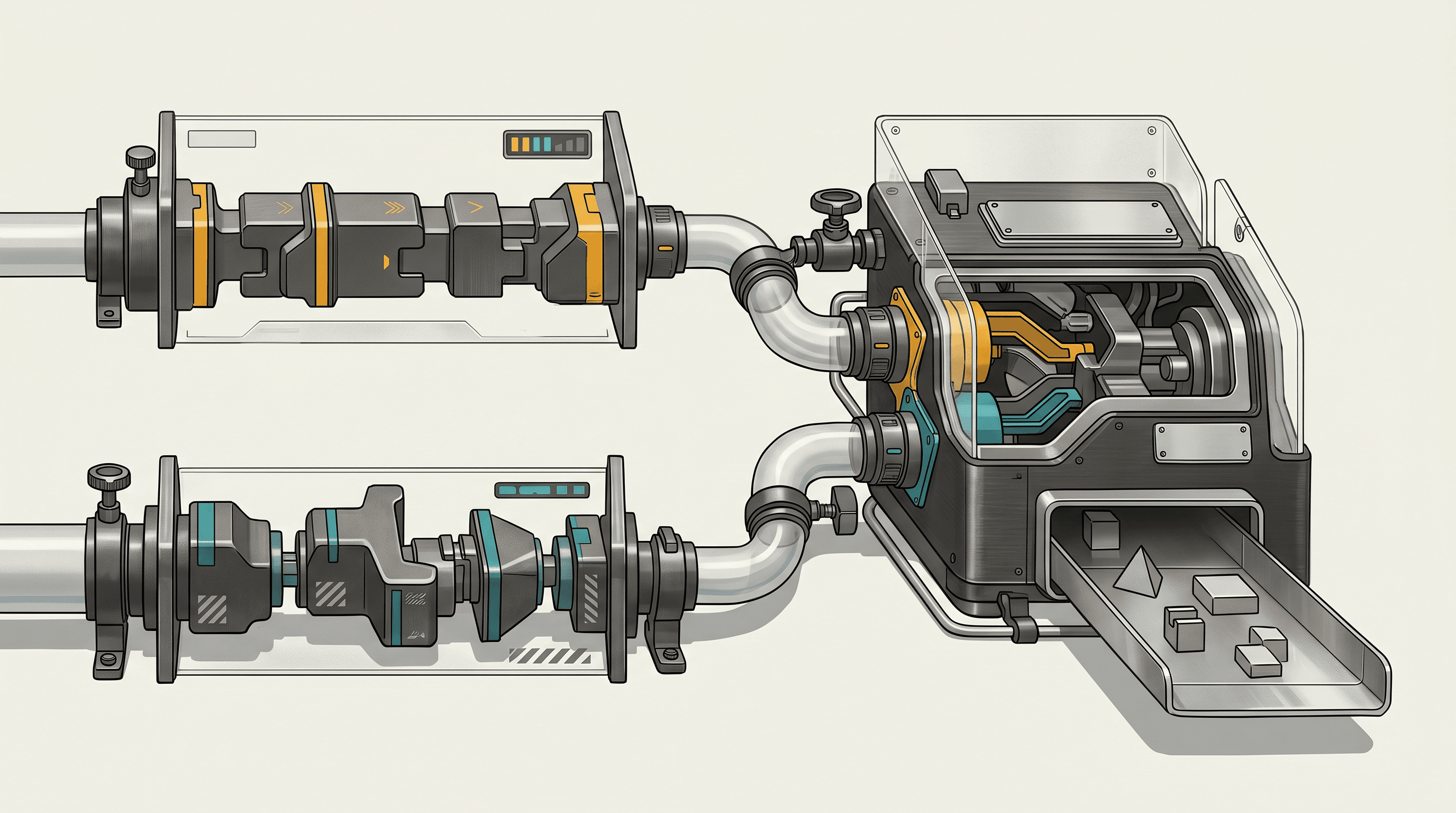
A unified AI API gateway fixes this by putting a single interface in front of every provider. One API key, one billing account, one integration point, and model switching that happens by changing a string instead of rewriting a client.
If you want the practical implementation pages underneath this argument, read the migration guide, the pricing comparison, and the OpenRouter comparison next. This page explains why teams adopt the gateway layer in the first place.
Key Takeaways
- Production apps in 2026 routinely call 3-5 providers, and each one adds its own account, billing surface, API format, and failure mode.
- A unified gateway puts one interface in front of all providers: one key, one bill, and model switching by changing a string.
- Gateways can lower costs through prompt caching passthrough, multi-channel routing, and eliminating weeks of multi-provider integration work.
- Model coverage and pricing shift often, so check a current directory (see TokenLab's model list, observed 2026-07-07) rather than relying on last year's snapshot.
- The biggest long-term payoff is cheaper future change: adding a new provider becomes a config update instead of an engineering project.
The Problem: Provider Fragmentation
A typical AI-powered application in 2026 might use:
- A flagship general-purpose model for chat and function calling
- A coding-focused model for generation and review
- A long-context model for document analysis
- A reasoning-focused model for math and multi-step logic
- A dedicated model for video or image generation
Without a gateway, this means five API keys to manage and rotate, five billing dashboards to monitor, five different error formats to handle, and five sets of rate-limit logic to reason about. When one provider degrades at 2 AM, your on-call engineer needs to know which fallback applies to which model, and that mapping is rarely documented anywhere central.
This isn't hypothetical. Every major AI provider has had public incidents, from rate-limit spikes to regional outages, and provider status pages are the fastest way to confirm current uptime before you commit an architecture to a single vendor. If your application depends on one provider, you inherit that provider's reliability profile as your own.
What a Unified Gateway Does
A unified AI API gateway sits between your application and the AI providers. It handles the plumbing so your code doesn't have to.
Single API Key, Hundreds of Models
One integration gives you access to every major provider through one credential. You switch models by changing a string parameter, not by rewriting your API client. TokenLab's model directory (observed 2026-07-07) lists current coverage across OpenAI, Anthropic, Google, DeepSeek, and specialized generation models, since exact counts and availability change often enough that a static number in an article goes stale fast.
from openai import OpenAI

client = OpenAI(
    api_key="sk-tokenlab-xxx",
    base_url="https://api.tokenlab.sh/v1"
)

# Same client, any model
response = client.chat.completions.create(
    model="gpt-5.5",  # or "claude-sonnet-5", "gemini-3.5-flash", "deepseek-v4-pro"
    messages=[{"role": "user", "content": "Hello"}]
)
Automatic Failover
When an upstream provider returns errors, the gateway routes to an alternative channel. Your application sees a successful response with no retry logic needed on your side.
This matters most for production applications where a short outage translates directly into lost revenue or a degraded user experience, not just an inconvenient error log.
Consolidated Billing
One invoice instead of five. One dashboard showing spend across all providers. One budget alert threshold. Teams that need to track AI cost by project or department skip the spreadsheet reconciliation that multiple provider bills otherwise require.
Protocol Normalization
OpenAI, Anthropic, and Google each define their own API format. A gateway normalizes these into a single format, typically OpenAI-compatible, so your code works with any model without format-specific branching.
Some gateways, TokenLab included, also support native protocol passthrough. That means you can use Anthropic's extended thinking or Google's search grounding through the same base URL when you need a provider-specific feature, instead of losing access to it behind the abstraction.
The Cost Argument
Gateways don't just simplify operations. They can reduce spend through a few concrete mechanisms:
Prompt Caching Passthrough
Prompt caching can cut input-token cost substantially for repetitive workloads. A good gateway passes through caching parameters to providers that support it:
| Provider | Cache mechanism | Notes |
|---|---|---|
| OpenAI | Automatic (prompts above a token threshold) | Discount applies to cached input |
| Anthropic | Explicit (cache_control breakpoints) | Largest discount on cache reads |
| Context caching | Savings vary by model |
Exact discount rates and thresholds change between provider updates, so confirm current terms against the provider's own pricing page before you model savings into a budget. For model-specific rates, verify current pricing on TokenLab's model directory rather than assuming last quarter's numbers still hold.
Multi-Channel Routing
For popular models, gateways can route requests through multiple upstream channels and select whichever has the best availability or pricing at that moment, rather than locking you into one path.
Reduced Engineering Time
The hidden cost of multi-provider integration is engineering time: building and maintaining clients for each provider, handling different error formats, implementing retry logic, managing key rotation, and watching rate limits. Doing this properly is realistically a multi-week project, plus ongoing maintenance every time a provider changes its API.
A gateway removes most of that work. The integration itself takes minutes, not weeks.
When You Don't Need a Gateway
Direct provider APIs are the right choice when:
- You use exactly one provider and have no plans to add another
- You need a guaranteed SLA with direct vendor support tied to a single contract
- Compliance requirements mandate a direct data processing agreement with the specific provider you use, and inserting a gateway complicates that audit trail
- Your workload is narrow enough that a single flagship model, such as Claude Sonnet 5 or GPT-5.5, covers every task you currently need
In these cases, the added abstraction layer is overhead without a matching benefit. Add a gateway when the second provider becomes a real requirement, not before.
Choosing a Gateway
Not all gateways work the same way. When evaluating one, check the following before committing.
Pricing Transparency
Some gateways add a markup on top of provider pricing. Others price at or near official rates. Understand the pricing model before committing, and compare it against a pricing comparison rather than taking either vendor's word for it. Because rates change, verify current pricing directly on the gateway's site before budgeting.
Reliability
The gateway itself becomes a point of failure, so it needs to be at least as reliable as the providers behind it. Look for multi-channel routing, automatic failover, and published uptime information.
Feature Passthrough
Does the gateway support streaming, function calling, vision, prompt caching, and extended thinking? Features that get stripped in transit defeat the purpose of using an advanced model like Claude Opus 4.8 or GLM-5.2 in the first place.
Operational Fit
A gateway is not just a cheaper token pipe. It's an operating layer. Ask whether it reduces on-call complexity, simplifies billing and spend attribution, carries the models you need this quarter (from coding-focused options like Claude Sonnet 5 and Kimi K2.7 Code to low-cost routing options like DeepSeek V4 Flash and Qwen3.7 Plus), and lets you switch defaults without rewriting application code. Those answers decide whether the gateway pays for itself.
Getting Started
If you're currently using the OpenAI SDK, moving to a gateway takes two line changes:
# Before: direct OpenAI
client = OpenAI(api_key="sk-openai-xxx")

# After: through gateway
client = OpenAI(
    api_key="sk-tokenlab-xxx",
    base_url="https://api.tokenlab.sh/v1"
)
Everything else stays the same. Your prompts, model names, streaming logic, and error handling all keep working.
In practice, that migration path is why gateway adoption often happens later than teams expect. The switch is easy only if you haven't buried provider-specific assumptions everywhere in your codebase. That's also why what AI Native teams do differently matters here: once your workflow is explicit about which model does what, provider switching stops being a crisis project and becomes routine maintenance.
The earlier you standardize the control plane, the cheaper every later provider change becomes. That's the real payoff. A gateway isn't just a nicer integration surface today. It's cheaper future change, and when the model market moves as fast as it does in 2026, from GPT-5.5 to Claude Fable 5 to Gemini 3.5 Flash, that future cost is part of today's architecture decision.
Without a gateway, every provider addition costs engineering weeks. With one, the same change often costs a config update, a test pass, and a rollout decision. That difference is hard to see in month one and obvious by month six. The gateway doesn't remove complexity from the market. It keeps that complexity from leaking into every application team's roadmap.
TokenLab provides access to a wide model catalog through a single API key with OpenAI-compatible format, native protocol support for Anthropic and Google, automatic failover, and prompt caching passthrough. Check current model coverage in the directory (observed 2026-07-07) and current terms on signup.
Get Started with TokenLab to connect one API key to every provider you actually need.
FAQ
Does a unified AI API gateway slow down requests compared to calling providers directly? A well-built gateway adds minimal latency, typically single-digit milliseconds for routing logic, since it isn't doing heavy processing on the request itself. The bigger latency factor is still the underlying model. If a gateway adds noticeable delay, that's usually a routing or infrastructure problem specific to that vendor, not an inherent cost of the pattern.
Can I still use provider-specific features like extended thinking through a gateway? It depends on the gateway. Some strip requests down to a lowest-common-denominator format, which means you lose access to features like Anthropic's extended thinking or Google's search grounding. Others support native protocol passthrough for these features through the same base URL. Check this specifically before committing, since it varies a lot between providers.
Is a gateway worth it if I only use one AI provider today? Not immediately. If you have no plans to add a second provider, a direct integration is simpler and has one fewer layer to reason about. The calculation changes the moment you know you'll need a second model, say a coding-focused model like Claude Sonnet 5 alongside a general flagship like GPT-5.5, since retrofitting a gateway after your codebase has provider-specific assumptions baked in is more work than starting with one.
The AI provider landscape will keep fragmenting. The question is whether you manage that complexity yourself or let a gateway layer handle it for you.
Sources
Price observed 2026-07-07
- TokenLab model directoryObserved 2026-07-07