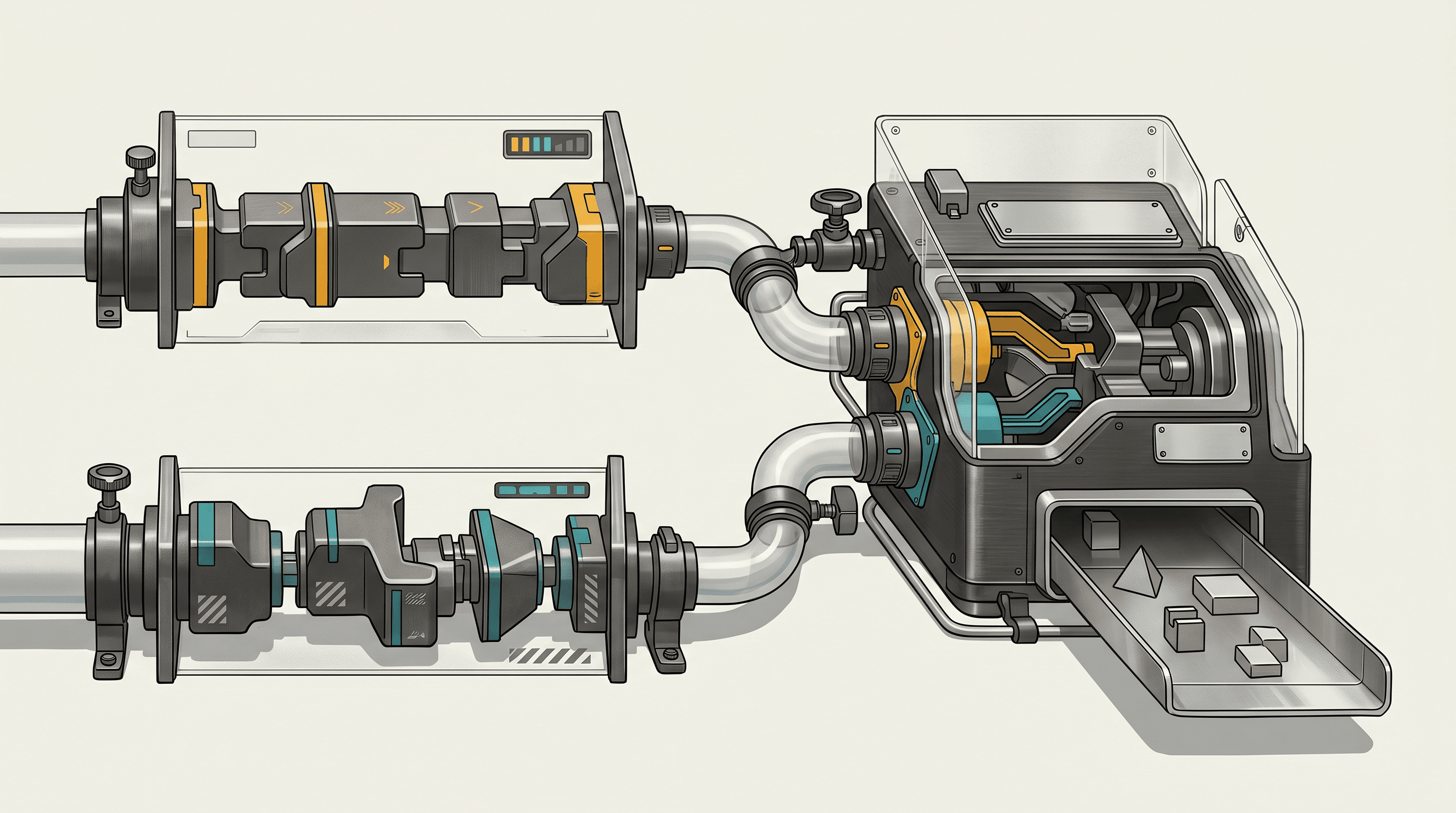
Here's a puzzle: a team of 5 people ships in one month what used to take 50 people six months. They're not working 10x harder. They're not 10x smarter. Something else is happening.
That something is what we call "AI Native" development. And it's not what most people think.
What AI Native Is Not
Let's clear up the confusion first. AI Native is not:
- Using AI tools: Installing Copilot doesn't make you AI Native any more than using email makes you "digital native."
- Adding AI features: Slapping a chatbot on your product is not AI Native. It's feature bloat.
- Automating everything: The goal isn't to remove humans. It's to amplify them.
- Moving fast and breaking things: Speed without quality is just faster failure.
These are common misconceptions because they're easy to sell. The reality is more nuanced and more powerful.
The Real Definition of AI Native Development
AI Native means designing your entire workflow, not just your product, around the reality of human-AI collaboration.
Think about what "mobile native" meant in 2015. Companies like TikTok and Instagram didn't just shrink their desktop experience onto phones. They built everything around what mobile made possible: cameras in every pocket, always-on connectivity, swipe-based interfaces. They had no legacy assumptions about what software "should" look like.
AI Native is the same shift, but for how work gets done. An AI Native team doesn't bolt AI onto existing processes. They ask: "If AI had always existed, how would we structure this work?"
The answer changes everything.
The Three Layers of the 10x Efficiency Gap
The efficiency difference between AI Native teams and traditional teams comes from three compounding layers:
Layer 1: Speed (The Obvious One)
This is what most people notice first. Code gets written faster. Documentation gets generated. Translations happen instantly.
But speed alone is a trap. If you just move faster doing the same things, you'll crash faster too. The billing bug we shipped on week two taught us that. AI-generated code at 10x speed means 10x faster bugs in production if you're not careful.
Speed is the least important layer. It's also the most visible, which is why it gets the most attention.
Layer 2: Scope (The Interesting One)
With AI, you can attempt things that were previously impractical:
- Internationalization in 13 languages from day one used to require a localization team and months of coordination. Now it's a Tuesday afternoon.
- Complete API documentation used to be the thing that never got done. Now it's generated and kept in sync automatically.
- Comprehensive test coverage used to be a luxury only big companies could afford. Now it's the baseline.
- 300+ model integrations used to require a team of integration engineers. Now one developer can build a unified AI gateway.
The scope layer means small teams can credibly compete with large organizations on surface area. Not by cutting corners, but by expanding what's possible.
Layer 3: Quality (The Counterintuitive One)
Most people assume AI means lower quality, more generic output and less attention to detail. The opposite is true when you do it right.
Here's why: AI forces you to be explicit about everything. When your coding partner is an AI, you can't rely on tribal knowledge, unwritten conventions, or "everyone just knows that." You have to document your standards, automate your checks, and make your constraints machine-readable.
The result? Codebases built with AI-native practices often have:
- Stricter type systems, because AI exploits ambiguity
- Better documentation, because AI needs explicit context
- More automated checks, because AI-generated bugs move fast
- Clearer conventions, because they're written down rather than assumed
Quality improves not because AI writes better code, but because AI-native development forces better engineering practices.
AI Native vs. AI-Assisted: The Critical Difference
| Aspect | AI-Assisted | AI Native |
|---|---|---|
| AI role | Faster keyboard | Collaborative partner |
| Workflow | Existing process + AI tools | Redesigned around AI capabilities |
| Documentation | For humans | For humans AND AI |
| Quality gates | Manual review | Automated CI gates |
| Conventions | Tribal knowledge | Machine-readable rules (CLAUDE.md) |
| Scope | Same scope, faster | Expanded scope, new possibilities |
AI-assisted development is using AI to do the same things faster. AI Native development is rethinking what's possible when AI is a first-class participant in the development process.
How AI Native Teams Actually Work
They Document for Two Audiences
Every convention, every architectural decision, and every constraint gets written down, not just for human teammates, but for AI. This means:
CLAUDE.mdfiles that define coding standards the AI must follow- Explicit type definitions that leave no room for interpretation
- Automated linters that enforce conventions the AI might forget
They Automate Quality Ruthlessly
AI Native teams don't trust review alone. They build CI pipelines with gates that catch AI-generated bugs:
- Type checking across the entire monorepo
- SSOT (Single Source of Truth) audits for duplicate implementations
- Enum sync verification between database and application code
- Domain-specific security gates for billing, auth, and permissions
They Expand Scope Deliberately
Instead of just shipping features faster, AI Native teams ask: "What was previously impractical that we can now attempt?"
At TokenLab, this meant:
- Supporting 300+ AI models through a single API
- 13-language internationalization from launch
- Agent-first API design with structured error hints
- Comprehensive documentation that stays in sync with code
- Practical migration paths like the OpenAI to TokenLab migration guide that let teams change providers without rewriting whole applications
The Compounding Effect
Here's what makes AI Native transformative: the three layers compound.
A traditional team might ship 1 feature per sprint at 80% quality. An AI-assisted team ships 3 features per sprint at 80% quality. An AI Native team ships 5 features per sprint at 90% quality because the quality infrastructure, automated gates, explicit conventions, and comprehensive tests, prevents the bugs that would otherwise slow them down.
Over six months, the AI Native team hasn't just shipped more. They've shipped more reliably, which means less time fixing bugs, which means more time shipping features, which compounds further.
This is the 10x gap. It's not 10x speed. It's speed × scope × quality, compounding over time.
Why Most Teams Fail at AI Native
The most common failure mode: treating AI Native as a tool adoption problem.
"We bought Copilot licenses for everyone. Why aren't we 10x faster?"
Because AI Native isn't about tools. It's about:
- Rethink workflows instead of adding AI to existing processes.
- Invest in infrastructure: automated quality gates, machine-readable conventions, and comprehensive CI.
- Accept new tradeoffs because AI-generated code needs different review patterns than human code.
- Build institutional knowledge by documenting everything explicitly instead of relying on tribal knowledge.
Teams that skip these steps get AI-assisted development at best. They move faster but don't fundamentally change what's possible.
What We Built as Proof
At TokenLab, we didn't add AI to an existing product. We built an AI infrastructure platform using AI Native development practices. This wasn't theoretical; it was recursive validation:
- We used Claude Code to build an API gateway for AI models
- We documented our development process in
CLAUDE.md, which became our engineering constitution - We built automated gates that catch AI-generated bugs before they reach production
The product itself is proof of the process. If we can build this with AI, our users can build remarkable things with the APIs we provide.
How to Start Your AI Native Journey
For Individual Developers
- Create a
CLAUDE.mdin your project root on day one - Use strict TypeScript. It's your best defense against AI-generated type drift.
- Build CI gates before you need them. They pay for themselves immediately.
- Review AI code like a junior developer wrote it: fast and capable, but lacking context.
For Teams
- Document all conventions explicitly. If it's not written down, the AI won't follow it.
- Automate quality enforcement. Don't rely on human review catching AI mistakes.
- Measure scope expansion, not just speed. The real value is doing things that were previously impractical.
- Invest in infrastructure early. The compound returns are enormous.
For Organizations
- Rethink team structure. AI Native teams are smaller but need stronger individual contributors.
- Redefine productivity metrics. Lines of code and story points don't capture scope expansion.
- Accept that the transition is cultural, not technical. Buying tools is the easy part.
FAQ
What does AI Native mean in software development?
AI Native development means designing your entire workflow around human-AI collaboration from the start. Unlike AI-assisted development (which adds AI tools to existing processes), AI Native rethinks what's possible when AI is a first-class participant in development.
How is AI Native different from just using AI tools?
Using AI tools makes you AI-assisted, not AI Native. The difference is structural: AI Native teams redesign their workflows, documentation, quality gates, and conventions around AI capabilities. They expand scope, not just speed.
Can small teams really compete with large organizations using AI Native practices?
Yes. The three-layer efficiency gap, speed × scope × quality, compounds over time. A 5-person AI Native team can match the output of a 50-person traditional team, not on every dimension, but on enough dimensions that matter: speed to market, feature scope, and execution quality.
What is CLAUDE.md and why does it matter?
CLAUDE.md is a project-level instruction file that AI coding assistants read for context. It contains coding conventions, architectural decisions, and constraints. It matters because AI needs explicit instructions and can't rely on tribal knowledge or unwritten rules that human teammates might infer.
What tools do AI Native teams use?
The tools matter less than the practices. Common choices include Claude Code, Cursor, and GitHub Copilot for code generation, plus automated CI/CD pipelines, strict type systems, and machine-readable convention files. The key is how these tools are integrated into a redesigned workflow.
TokenLab provides unified access to hundreds of AI models through a single API with flexible model-by-model pricing. We built it with AI, to serve AI developers. Get started — create an account and add credits to start building.